Basic Filament Types: PLA, PETG, TPU
PLA, PETG, and TPU are the most commonly used filaments in 3D printing due to their versatility, ease of use, and availability, making them suitable for a wide range of applications. Usually, PLA is the filament most beginners start to print with, followed by PETG for stronger or more technical parts and TPU for certain applications.
PLA
PLA (Polylactic Acid) filament is a biodegradable and plant-based material commonly used in 3D printing due to its ease of use and low odor. It is ideal for a wide range of applications, including prototyping, decorative items, and educational projects, as it adheres well to surfaces and prints at lower temperatures (around 210-220°C). This type of filament is also the most commonly used filament in 3D printing for beginners, as it offers the easiest printing experience.
PLA is more sensitive to heat than other materials, which means that it might start to soften faster when exposed to higher environment temperatures. For example, a model printed in PLA can start to deform and soften if exposed outside in a hot summer day.
Generally, PLA is less sensitive to moisture compared to other filaments, but it can still absorb it in humid environments, which can lead to poor print quality, so it’s essential to store it in a dry environment.
Learn more about PLA in the Bambu Lab Filament Guide
PLA Variants: Silk, Matte, Glow, CF
Besides the basic PLA offered in multiple colors, you can get it in various other options.
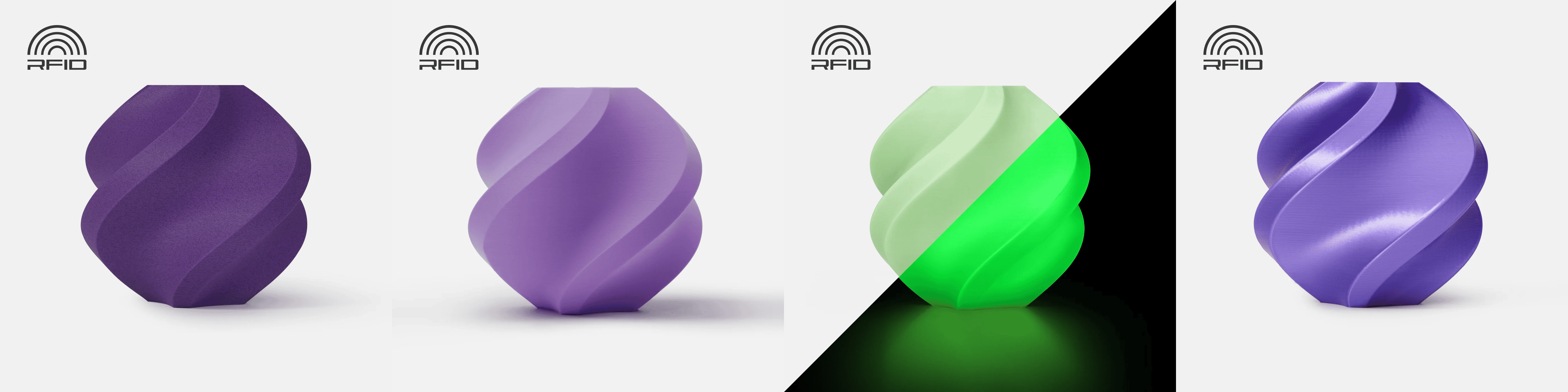
For models where you want a shiny surface you could try PLA Silk which is best used for cosmetic prints. Matte PLA is another option if you have models that require a matte finish, which is somewhat similar to the finish given by the PLA CF (carbon-fiber infused filament).
For particular applications, you can also use PLA Glow which can be used for printing glow-in-the-dark models.
There are a lot of options when it comes to printing with PLA, and we recommend learning more about what is available by following this link.
PETG
PETG (Polyethylene Terephthalate Glycol) filament is a strong, durable, and slightly flexible material commonly used for functional parts, containers, and mechanical components due to its excellent chemical resistance and impact strength. It prints at higher temperatures (around 240-250°C) compared to PLA, making it a slightly more challenging but still very user-friendly.
One of the benefits of PETG is its slightly higher temperature resistance compared to PLA, which allows it to be used in environments with a higher temperature without softening as quickly.
PETG is more prone to absorb moisture from the air, which can lead to print defects like bubbling and stringing, so proper storage in a dry environment and proper drying is essential to maintain print quality.
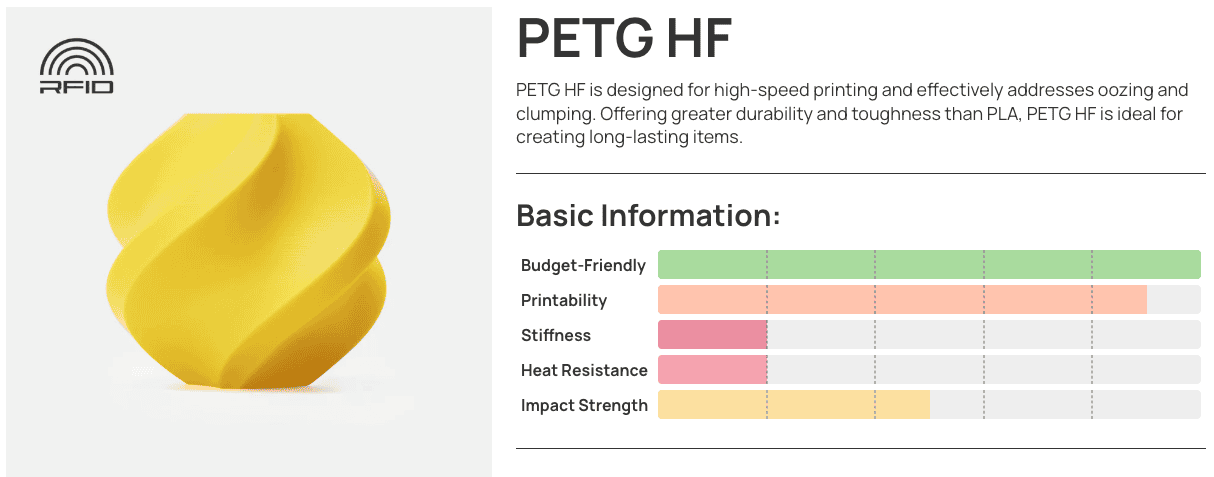
Learn more about PETG in the Bambu Lab Filament Guide
TPU
TPU (Thermoplastic Polyurethane) filament is a soft and flexible material widely used for creating items such as phone cases, gaskets, seals, and wearable devices due to its excellent elasticity and durability. While TPU can be printed relatively easily, it can require some fine-tuning of print settings like lowering the print speeds and retraction to avoid clogging and ensure smooth extrusion.
TPU can quickly absorb moisture, leading to issues like poor print quality and increased brittleness. Storing TPU in a dry environment and drying it before starting a print is crucial to ensure the best print results.
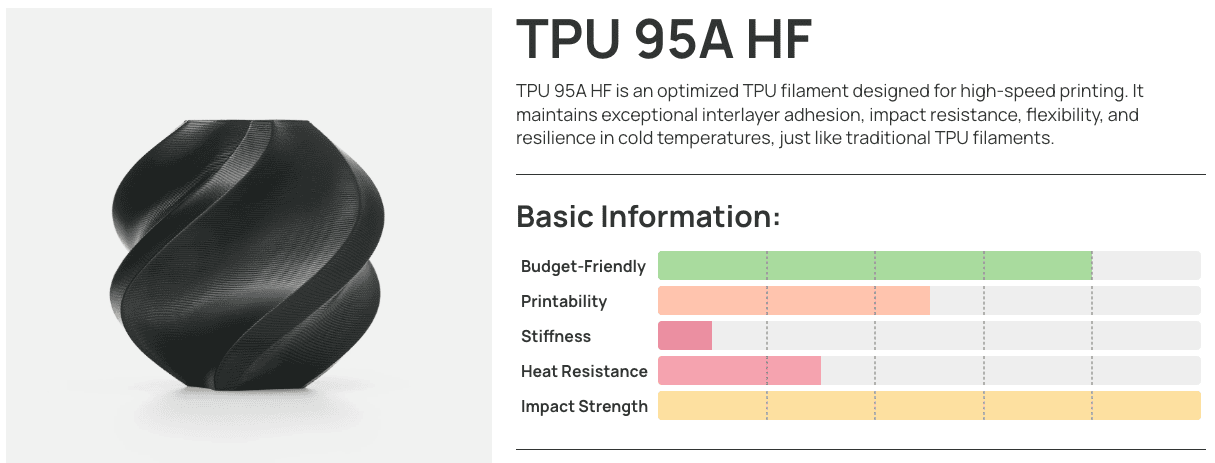
Learn more about TPU in the Bambu Lab Filament Guide
Filament Drying
Filament drying is crucial because many 3D printing materials are hygroscopic, meaning they absorb moisture from the air. When filament contains excess moisture, it can cause printing defects such as bubbling, oozing, poor layer adhesion, stringing, and rough surface finishes. The trapped moisture turns to steam inside the hotend, leading to inconsistent extrusion and weak prints.
Properly drying filament before printing ensures smooth extrusion, increased strength of your 3D models, and improved print quality, while also preventing issues like clogging and print failures.
Filament drying can be performed using a dedicated device called a Filament Drier. Such a device can heat up the filament and remove the moisture absorbed by the filament. Once the filament is dried, it is recommended to keep it away from moisture by placing the spools in a sealed bag when not in use.
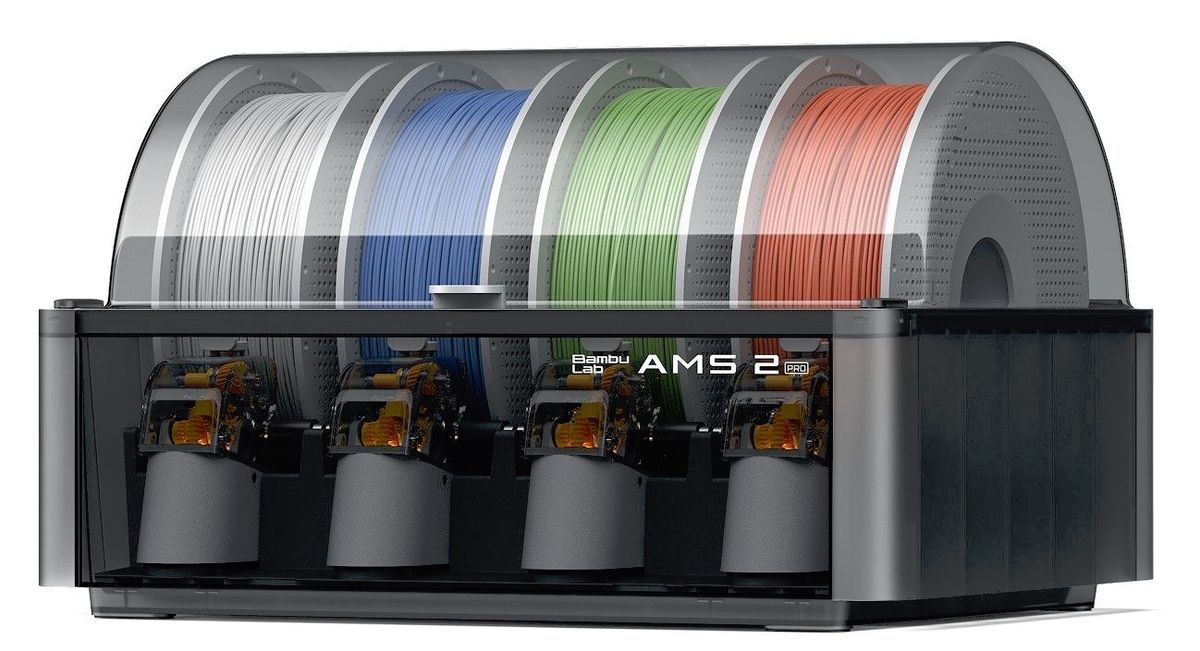
To simplify the drying process, Bambu Lab has integrated filament drying in the AMS 2 Pro and the AMS-HT units which can be used to effectively dry filament before use. Thanks to the RFID detection, if you are using Bambu Lab filament, the correct drying settings are automatically detected and applied to the drying process.