
Phases of Development
01
I. Editing the STL Model
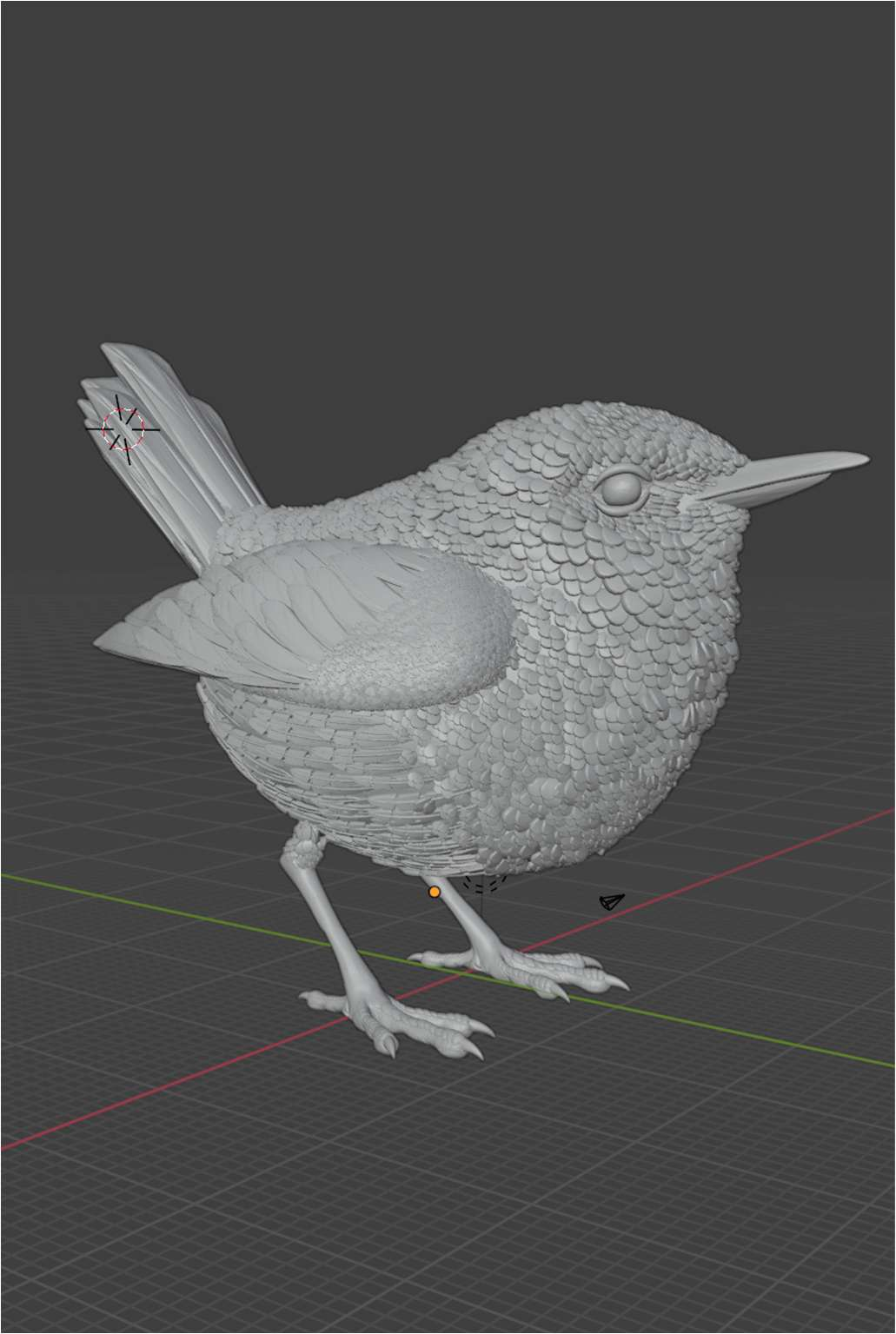
- A STL model of a generic Wren was edited in Blender to shorten the legs, change the tail position, and modify the beak.
02
II. Printing Models
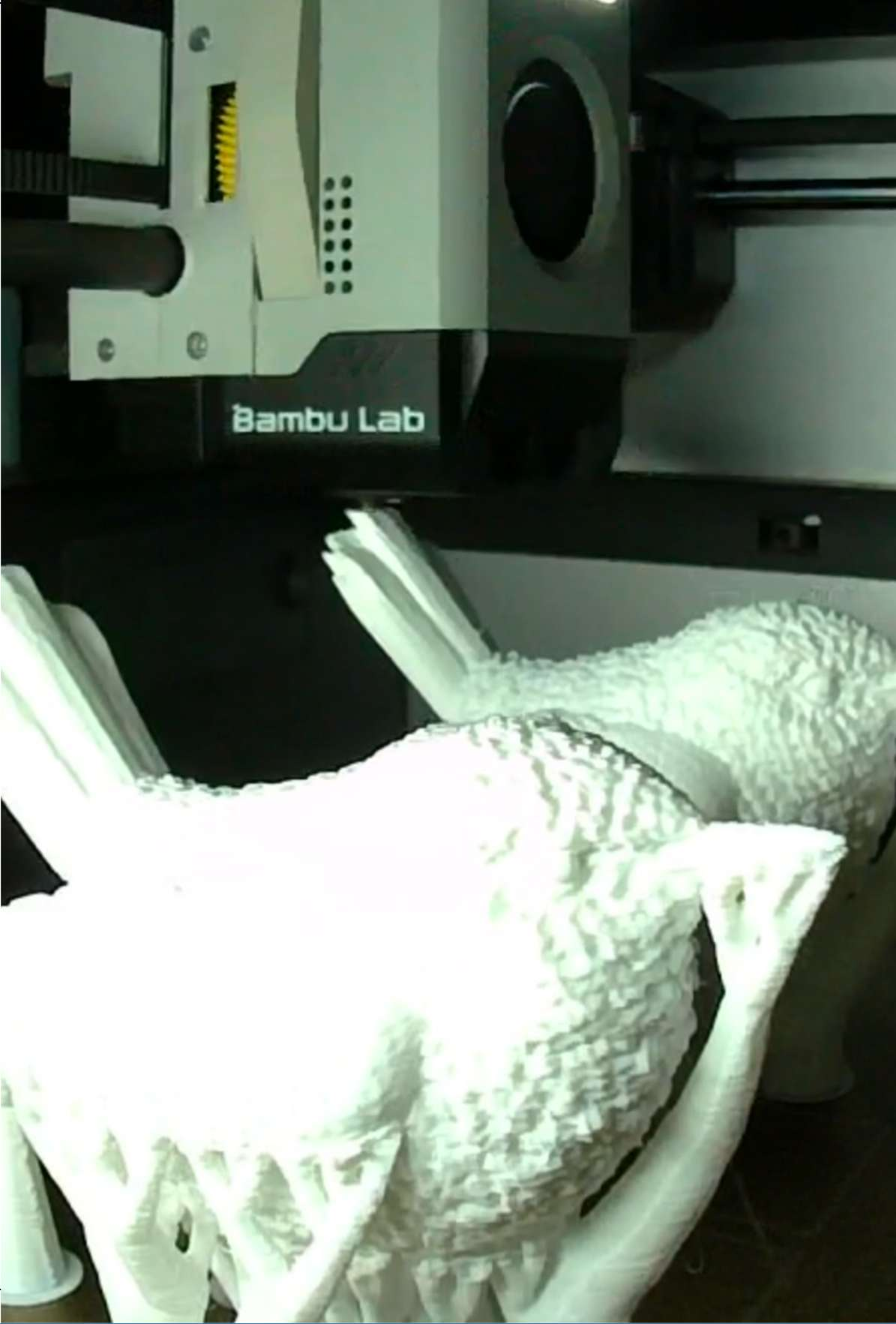
- Models were printed in white PETG using tree supports.
03
III. Post-Processing
- Tree supports were removed using needle-nose pliers.
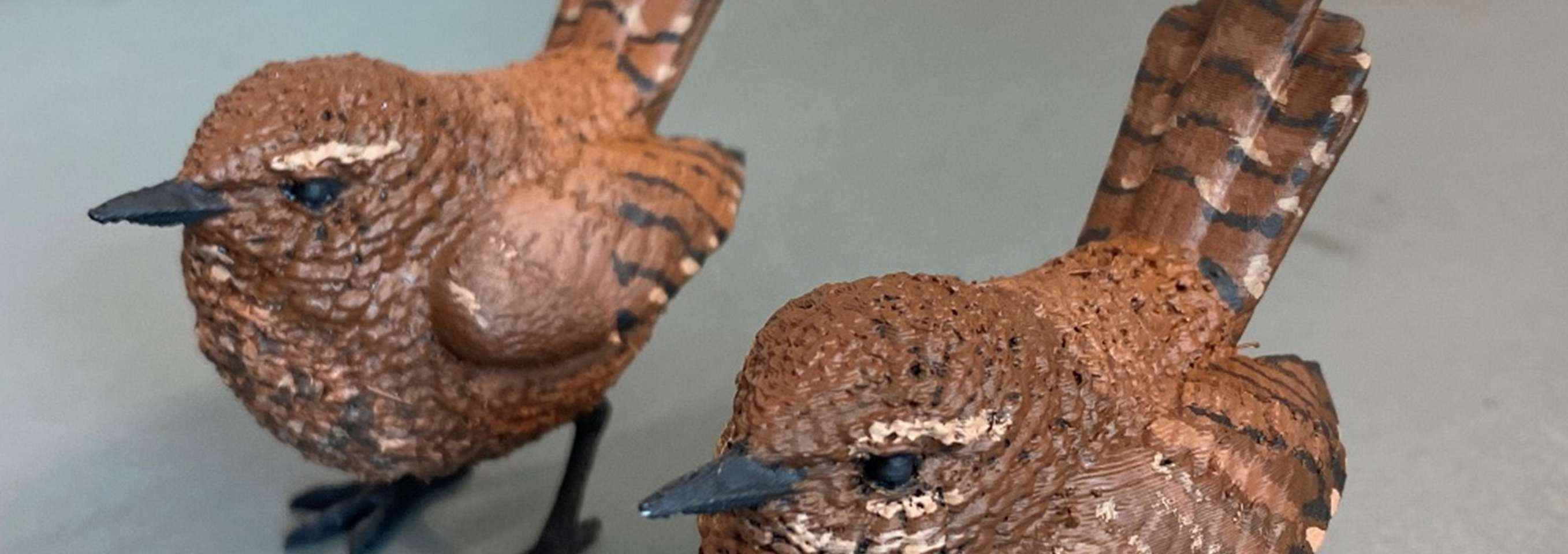
- Alexa Wiebe then painted her Pacific Wrens for realism.
Skills Developed
Support & Resources
- Alexa Wiebe
- Dr. Ken Otter
- Nicola Kooper
- Kimberley Wetten
- Applied Analysis Hub
- Spark Lab
Product Images

Client Feedback
The AAH helped me design and print Pacific Wren models for my master's project. The model proportions are accurate to a real Pacific wren and are meant to be used as decoys for target banding. The models will be set up in the field next to a speaker playing the Pacific wren song with a mist net in front of them. The decoy and the song will trigger territorial male Pacific wrens to fly at the decoy, making them fly into the net. Being able to capture and band these wrens and being able to identify individuals in the field will be vital to my research.
— Alexa Wiebe