Printing High-Temperature Materials with the Bambu Lab X1C
The Bambu Lab X1C is great for printing materials that need high heat because of its enclosed design and the heatbed, which can get as hot as 100°C. This helps the printer increase the warmth inside generated passively, making it easier for prints to cool evenly and avoid warping. ABS or Nylon don’t like cooling too fast, so this setup makes your prints stronger and less likely to crack!
High-Temperature filaments like ABS, ASA, PC, PETG, and Nylon, can create strong, durable parts but need a little extra care. We’ll break it down into simple steps to help you get great results.
Keep Your Filament Dry for Better Prints
Filaments like Nylon, PC, and PETG, love to soak up moisture from the air (we call these hygroscopic). Wet filament can cause bubbly prints, weak parts, or even clogs in your printer. To avoid this, always dry your filament before printing – use a filament dryer even if the filament is freshly opened, as some moisture can still penetrate the plastic bag in which the filament is kept.
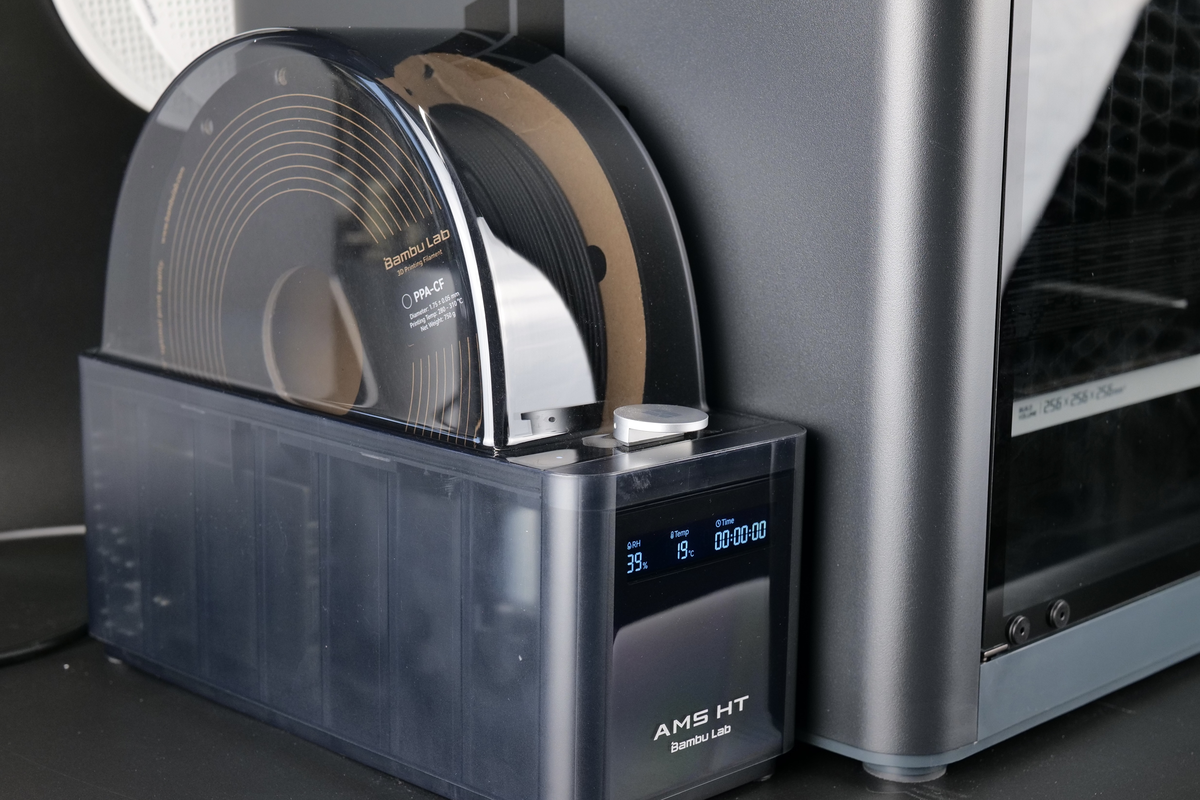
After drying, store it in an airtight container with silica gel packets while printing to keep it dry. If you have an AMS HT, it can help dry your filament and also act like a dry box, which is super handy.
Dry filament means smoother prints and fewer headaches!
Pre-Heat the Printer for Large Prints
When printing big models with high-temperature materials, warming up the printer first can make a huge difference. These materials don’t like cooling too quickly, which can cause warping or cracks and in the end, a failed print.
To get the chamber nice and toasty, pre-heat your X1C before starting the print. Simply set the heatbed to 100°C, turn the AUX fan (the one inside the chamber) to 50%, then wait for 15-20 minutes. You can easily do this from Bambu Studio.
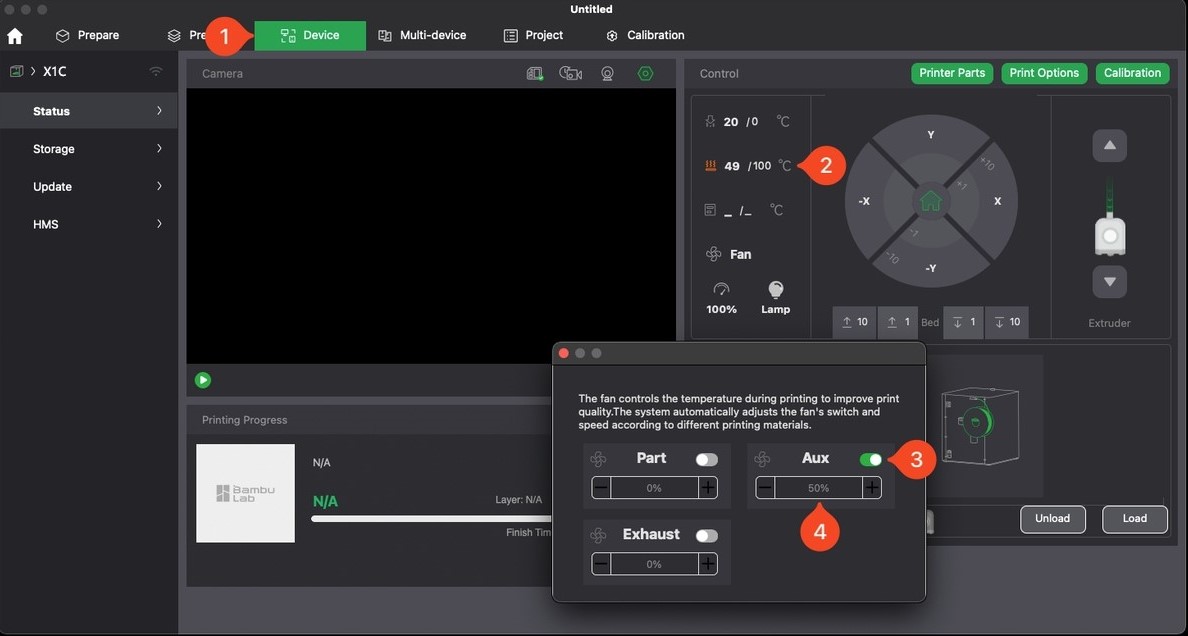
This warms up the inside of the printer, creating a warm environment for your high temperature prints. It’s especially helpful for large prints that take a large portion of the heatbed.
Also remember that once such a print is completed, it is best to avoid removing it right after it’s completed, and let it cool down slowly until it reaches room temperature. Doing it this way will allow the printed model gradually cool down to avoid warping and cracks, and the potential volatile components generated during printing will settle.
Try Fiber-Infused Filaments and Use Glue for Better Adhesion and Easy Removal
It’s not always easy to get perfect results with high-temperature filaments, so we’ll share two great tricks that can make your prints stick better, come off easier, and handle tricky materials more smoothly.
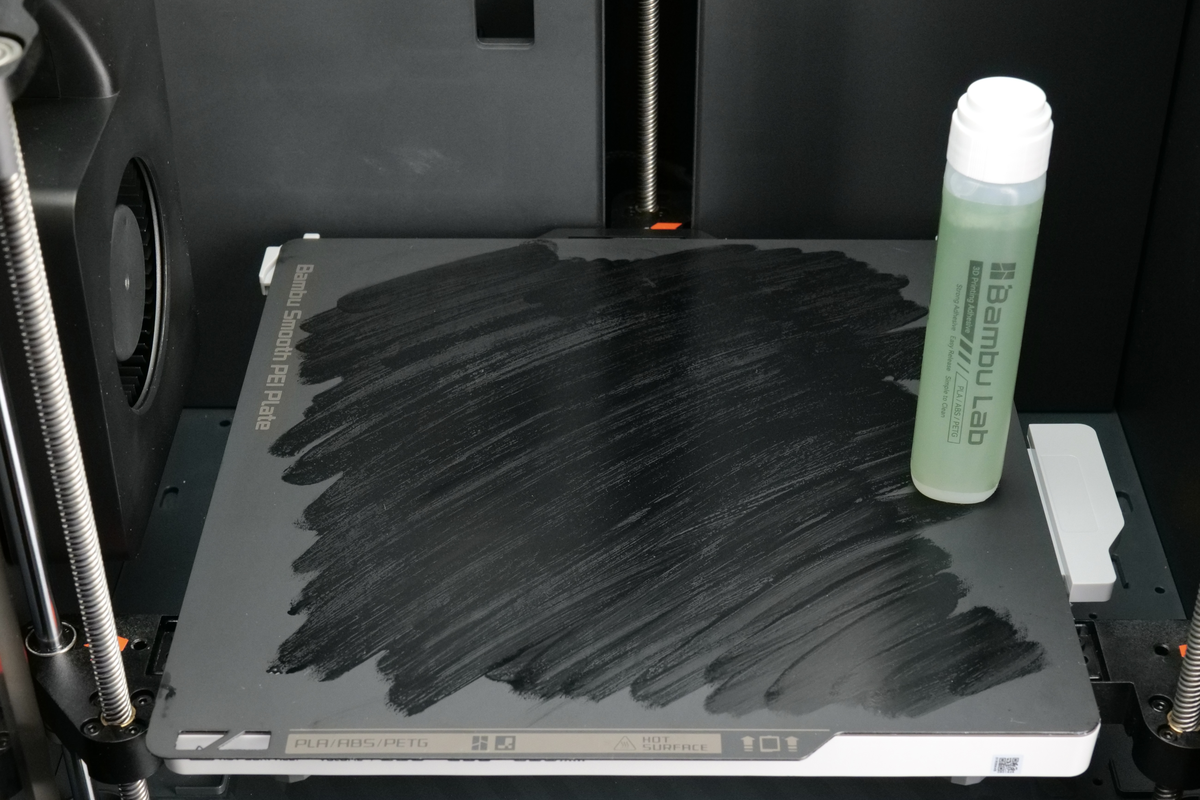
First, apply a thin layer of glue stick or liquid glue to your build plate before starting. This helps these materials grip the plate tightly during printing, preventing curling or detachment, and makes it super easy to remove the model afterward without damaging the plate!
Second, if you’re working with filaments that are hard to print because they can warp easily (like Nylon or ABS), try fiber-infused filaments, such as carbon fiber-filled Nylon (PA6-CF) or glass-filled ABS (ABS-GF). These filaments have tiny fibers mixed in that make the filament stronger and more stable during printing, so they’re less likely to warp, even if your X1C’s chamber isn’t super hot. Besides the printing benefits, thanks to the added fibers, the printed models will also look even better!
Combining glue for adhesion and fiber-infused filaments for stability is a winning strategy for awesome high-temperature prints!