
Build Plates – When to use What
Build Plates – When to use What
When you start using a 3D printer like the A1, the surface you print on plays an important role in how well your prints turn out. Out of the box, the A1 comes with the Textured PEI Plate but there are other plate types available which can be used in different situations. Each one works differently, so it’s good to know what they do and when to use them.
Bambu Textured PEI Plate
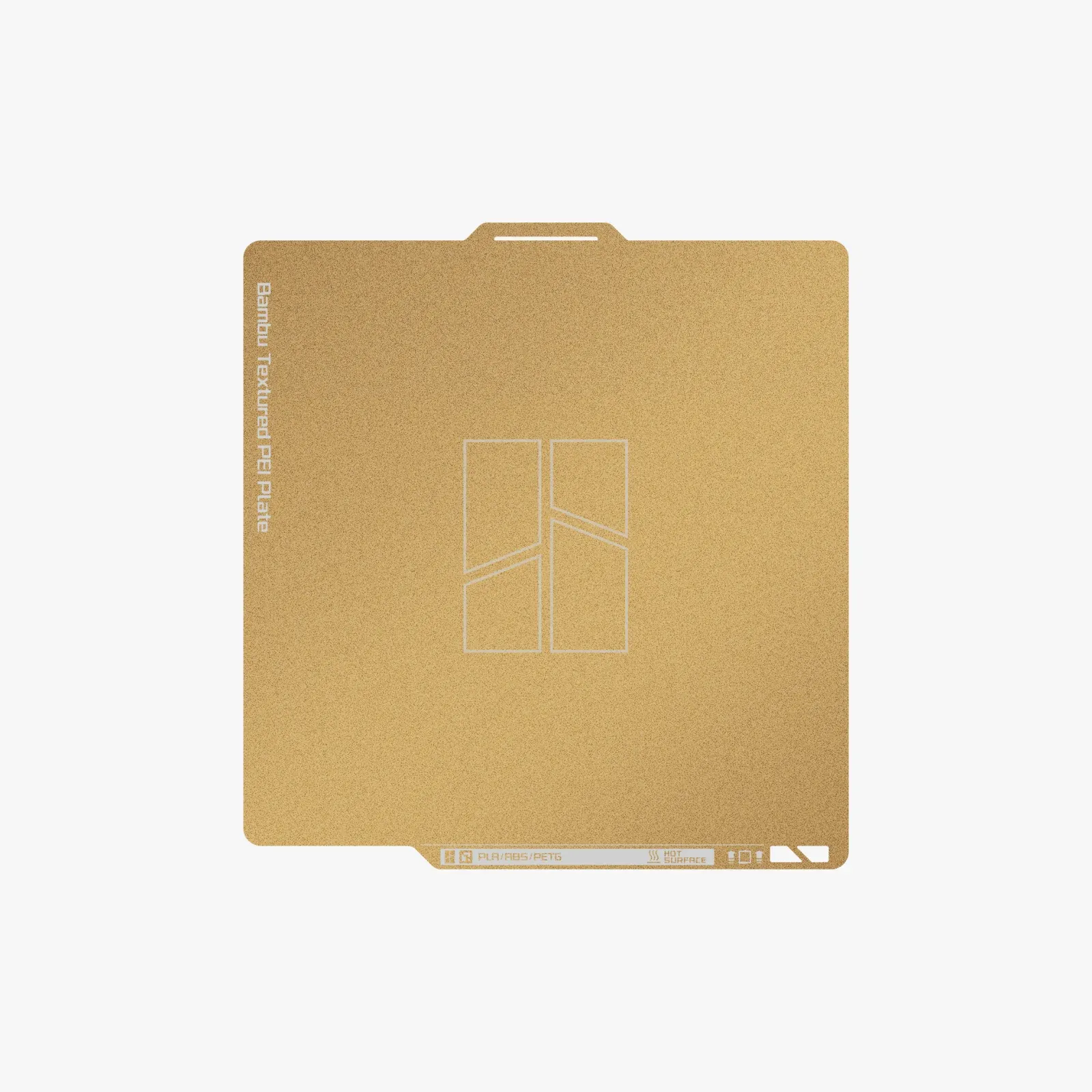
The Textured PEI Plate helps prints stick really well during printing. The cool part is that after the plate cools down, the prints come off easily without much effort.
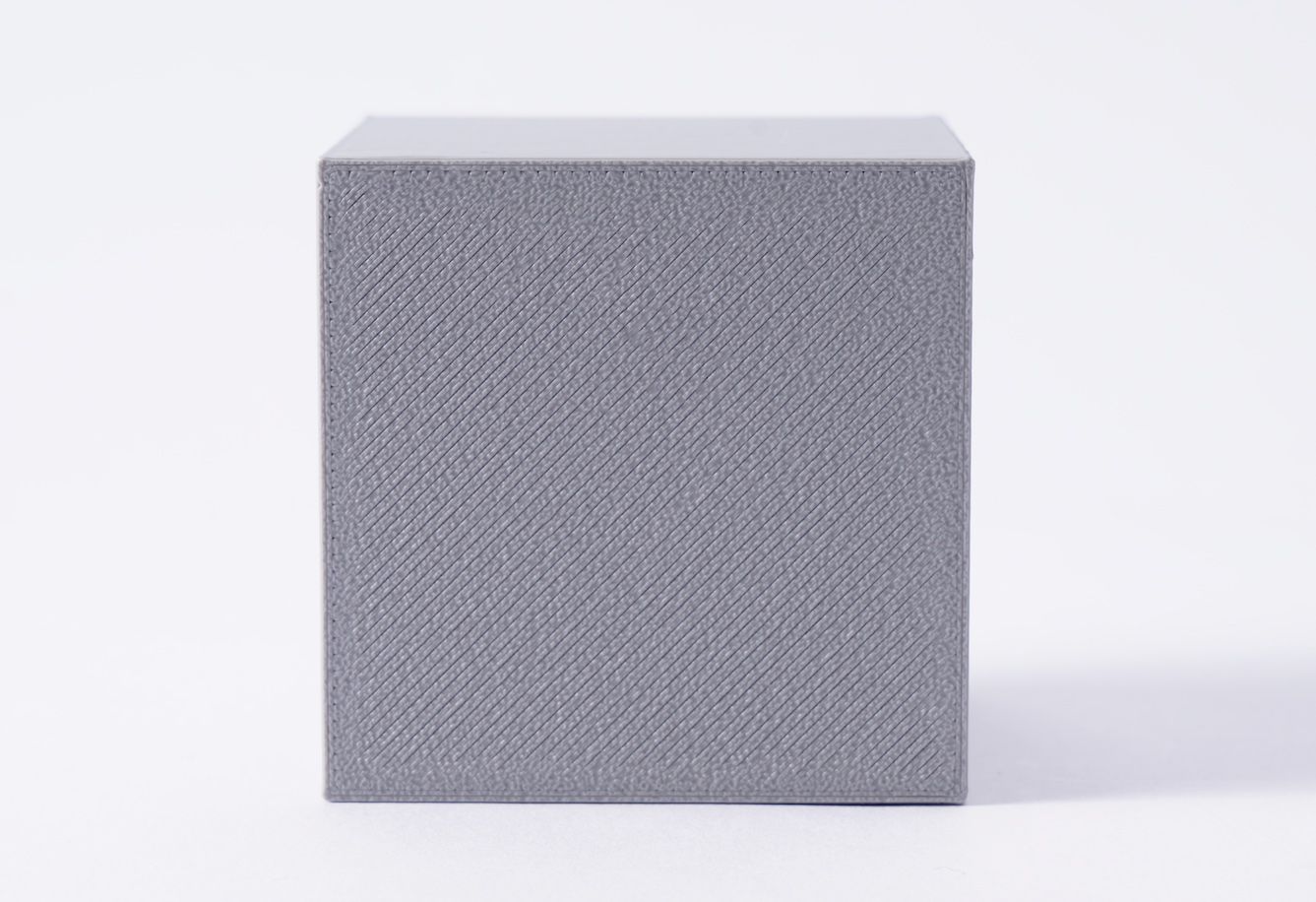
Key Points:
- Strong Grip: The adhesion between the prints and the plate is significantly improved, eliminating the need for adhesives for certain filaments.
- Easy Print Removal: Once the plate cools down (below 35°C), the prints pop off easily.
- Durable: This plate is tough after optimizing the manufacturing process, the durability of the plate is enhanced.
When to Use:
- Strong Bed Adhesion: If you’re printing larger parts or materials that tend to warp, this plate will hold the print securely in place.
- Easy Removal: If you don’t want to struggle to get your prints off the bed, this plate makes it easy once it cools down.
How to Clean:
- Using Warm Water and Detergent (Recommended): The Textured PEI Plate is best cleaned with warm water and dishwashing detergent. This method ensures the plate is thoroughly cleaned, removing oils, dust, and other contaminants without compromising the texture, which is key to good print adhesion. It is highly recommended to clean the plate in this way for optimal performance.
IPA (Isopropyl Alcohol) should be avoided on the Textured PEI Plate, as it doesn’t clean the surface effectively due to the texture of the plate. IPA will fail to remove contaminants properly, which can lead to print failures and poor adhesion. Stick to warm water and detergent for the best results.
Bambu Smooth PEI Plate
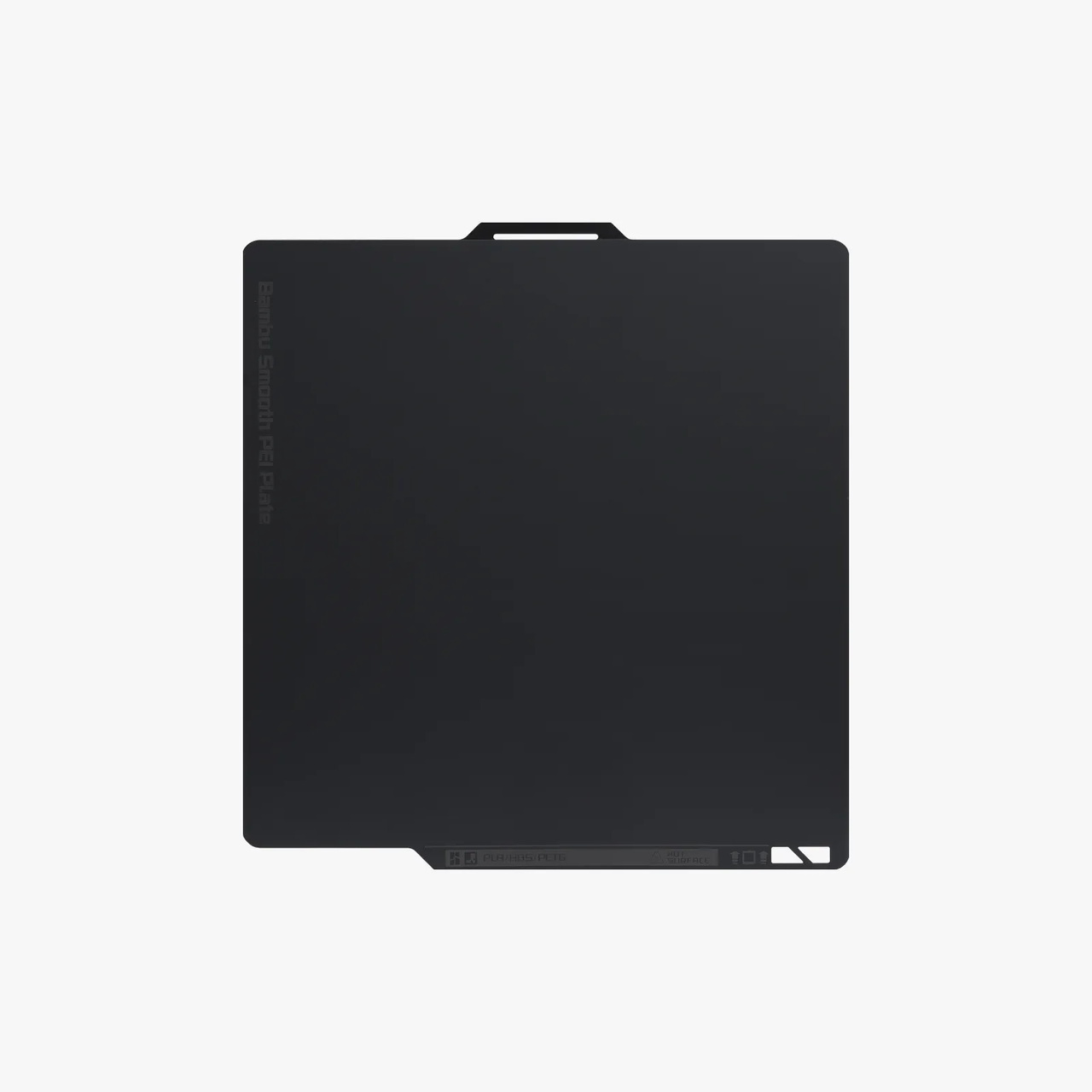
The Smooth PEI Plate helps make your 3D prints more accurate, especially in the vertical direction (the Z-axis). This means that if you need your parts to fit together perfectly, this plate helps improve print accuracy.
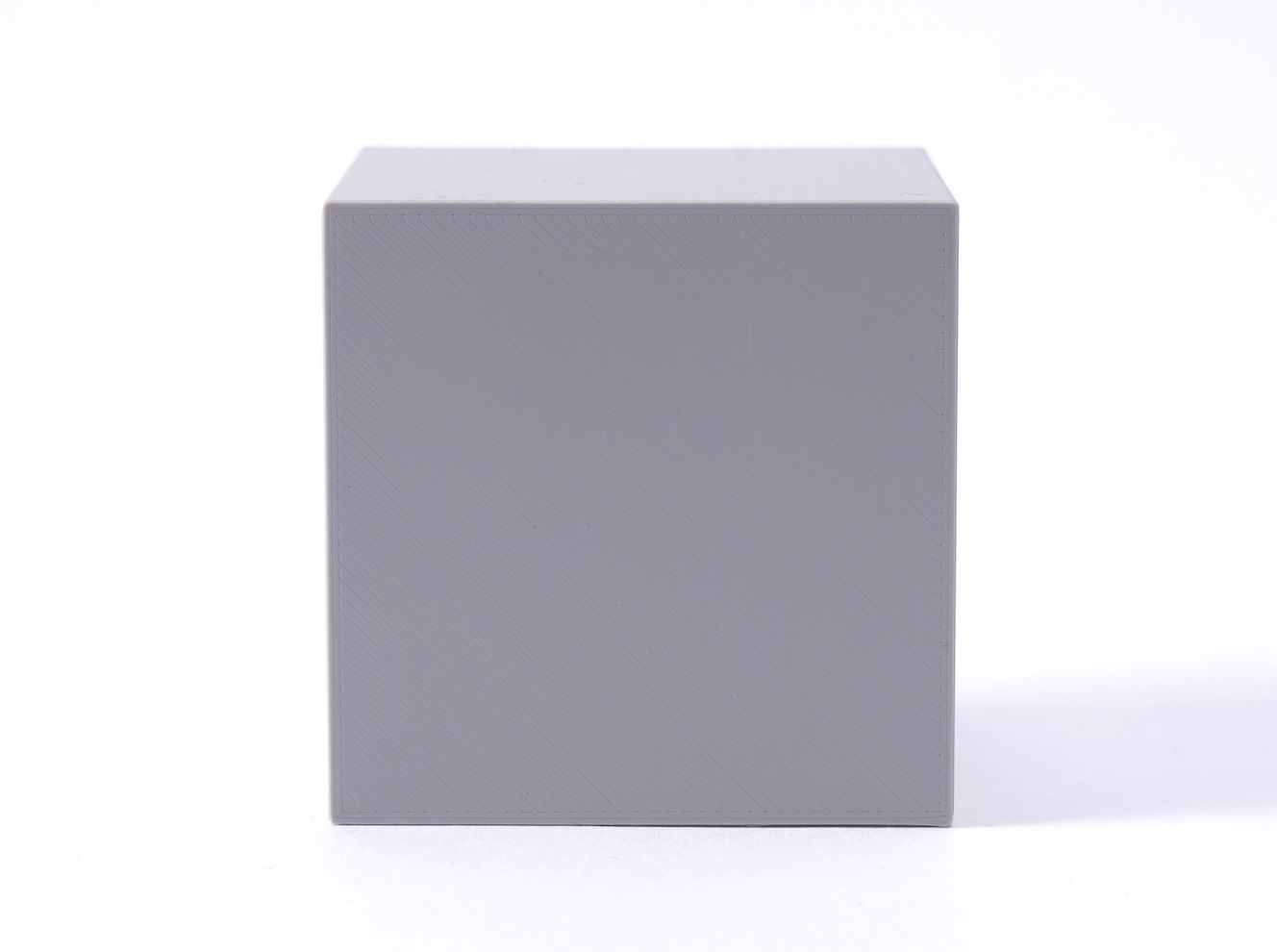
Key Points:
- Smooth Finish: When you use this plate, your prints will come out with a smooth, matte surface, which looks nice and clean.
- Works with Many Filaments: You can print common materials like PLA, TPU, and PETG with ease, as the plate can offer excellent adhesion with any of them.
When to Use:
- Precise Parts: If your project needs parts that fit together perfectly, the smooth PEI plate will help make that happen.
- Smooth Surfaces: If you want your prints to have a nice, matte finish on the surface which is in contact with the heatbed.
How to Clean:
- Using IPA (Isopropyl Alcohol): The Smooth PEI Plate can be effectively cleaned with 99% Isopropyl Alcohol and a clean paper towel. Since the surface is smooth, any oils or contaminants can be easily removed. For optimal results, it’s recommended to wipe the surface 2-3 times to ensure all residues are completely cleared.
- Using Warm Water and Detergent (Recommended): For a more thorough cleaning, using warm water and dishwashing detergent is an excellent option. This method ensures the plate is fully cleaned, removing oils, dust, and other contaminants, leaving the surface perfectly prepared for the next print.
It is important to remember that for certain types of filament, applying Glue Stick or Liquid Glue can help protect the plate from damage by acting as an interface layer to help remove the model. It can also promote adhesion to increase reliability and the chances of success.
Bambu Cool Plate SuperTack
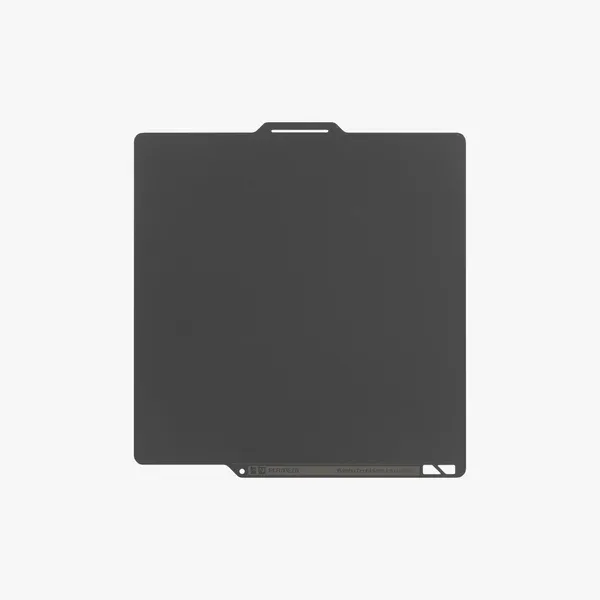
Key Points:
- Very Strong Grip: The SuperTack coating provides very strong adhesion for PLA and PETG filaments even at low temperatures.
- Energy Saving: You can save a significant amount of energy as the SuperTack plate doesn’t need a high temperature from the heatbed.
- Durable: The coating is durable, retaining its sticky properties even after extensive use.
When to Use:
- Strong Bed Adhesion with little temperature: When printing models in PLA and PETG and you want the best adhesion even when a low temperature is used.
How to Clean:
- Using Warm Water and Detergent (Recommended): The Cool Plate SuperTack should be cleaned with warm water and dishwashing detergent, as this method helps maintain the integrity of the coating, which is crucial for proper print adhesion and a long-lasting use.
Avoid using organic solvents like acetone or IPA to clean the build plate, as they can damage the SuperTack surface and affect print adhesion.
Bambu 3D Effect Plates
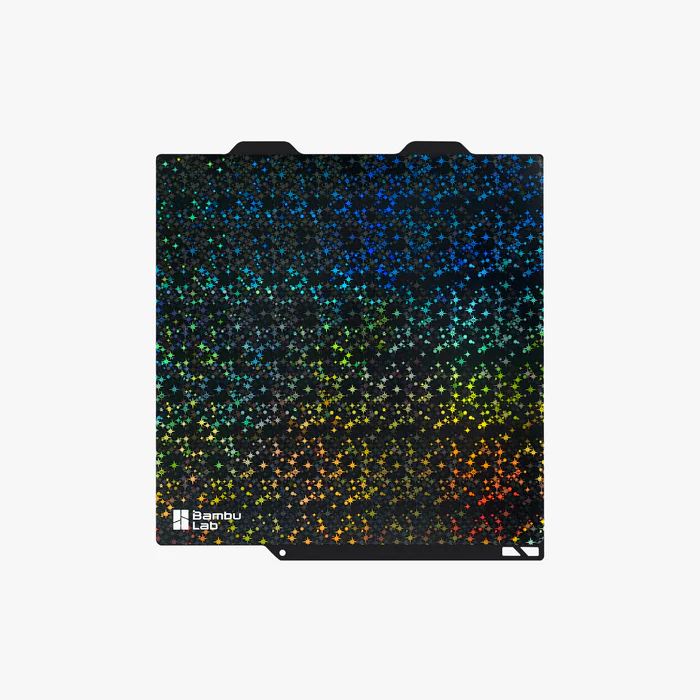
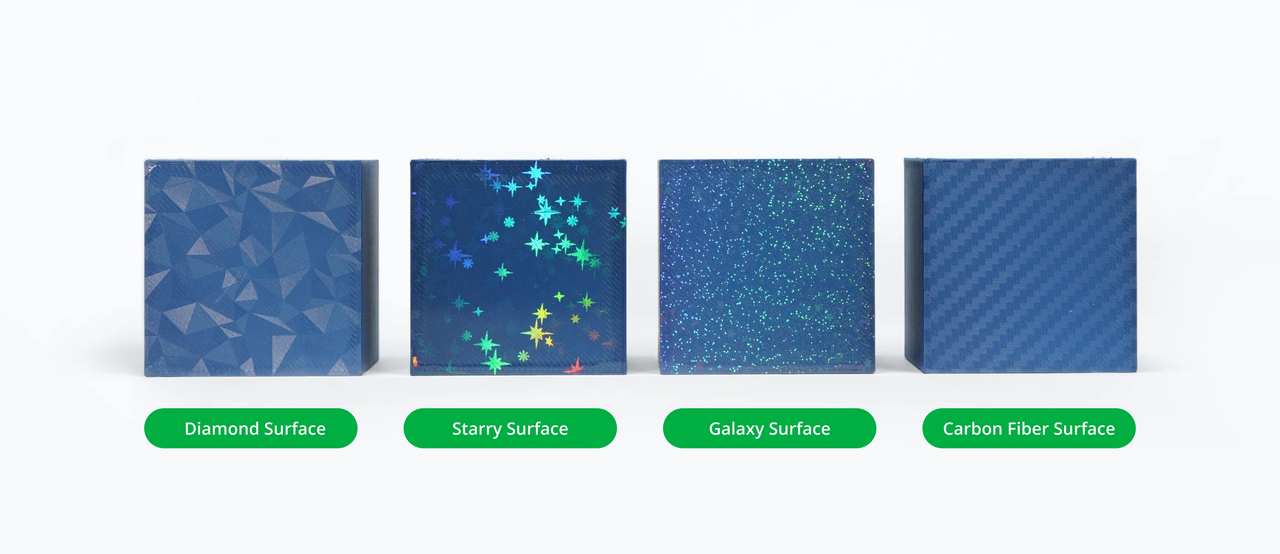
There are multiple 3D Effect plates you can choose from, which give you different textures for the printed models.
Key Points:
- Cool Visual Effects: The 3D Effect coatings apply a cool visual effect on the contact surface.
- 3D Effect Spare Sheets are consumables: To prolong the lifespan of the transfer textures, try placing your print objects on different areas of the sheet.
- Avoid using glue:When glue is used on the surface, the effect might change and smudges can show up on the first layer.
- Best used with PLA and TPU: It is recommended to avoid using the 3D effect plates with other filaments, as they can fuse with the model and damage the coating.
- Use the Smooth PEI/High Temp Plate settings: When using the plate, select the Smooth PEI/High Temp Plate option in the slicer for the correct plate options to be applied.
When to Use:
- When a different finish is required: The 3D Effect plates are best used for models that require a cool visual effect to be present on the first layer of the model.
How to Clean:
- Using Warm Water and Detergent (Recommended): The 3D Effect plates should be cleaned with warm water and dishwashing detergent, as this method helps maintain the integrity of the coating, which is crucial for proper print adhesion and a long-lasting use.
Choosing the Right Plate for Your Needs
If your project requires high precision and smooth contact surface, and you don’t mind applying glue for some filaments like PETG, the Bambu Smooth PEI Plate is the better option. It excels when printing parts that require tight tolerances and precise alignment, making it the go-to for intricate or mechanical prints.
On the other hand, if you’re after strong adhesion with minimal setup and prefer easy removal of prints once the bed cools down, the Bambu Textured PEI Plate is ideal. It’s also the more robust option for high-wear usage.
Each plate brings its own advantages, and your choice will depend on the specific requirements of your project—whether you prioritize precision and finish, or adhesion and convenience.
Glue – When and why to use it
Glue was commonly used in 3D printing to improve the adhesion of the first layer to the build plate, which is critical for print success. In the past, it was used when heated bed platforms were not as common, or the printed materials needed a bit of help to be successfully attached to the print surface.
Most 3D printing surfaces can be used without glue, but there are certain scenarios when using glue can be the difference between a successful print or a failure.
Glue Stick
This is the common, washable adhesive stick (often the same kind used for paper crafts) that is applied to the build plate to improve bed adhesion.
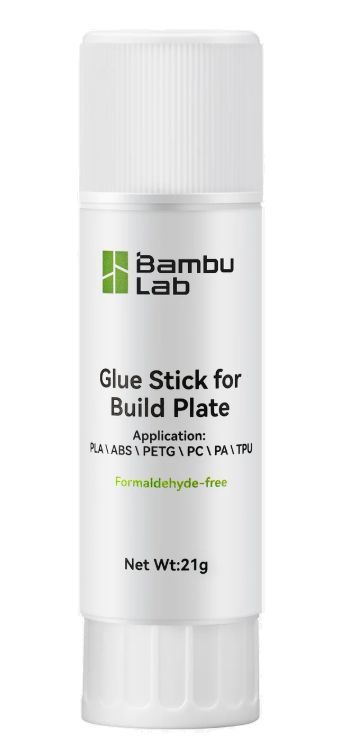
When applied to the bed surface, it creates a slightly tacky layer that helps filament grip better, reducing issues like warping or the print detaching mid-print. This is especially useful with materials prone to poor bed adhesion, such as ABS or even PLA on smooth surfaces or when using a lower temperature for the heatbed.
In addition to helping parts stick, glue can act as a protective barrier between the filament and the print surface. For example, with PETG on a Smooth PEI Plate, it prevents overly strong bonding that might otherwise damage the print surface during removal. It’s also a cost-effective and easy to wash after the print is completed.
However, it does come with drawbacks. Glue needs to be cleaned off periodically, as buildup can cause uneven surfaces. It can also leave residue on parts, and overuse may create messy conditions around the bed. Still, when applied properly, it’s a simple and effective tool that enhances print reliability and protects your build surface.
Liquid Glue
Liquid Glue, such as Bambu Lab Liquid Glue, is used to improve bed adhesion and help prevent print failures by ensuring that the model sticks consistently to the build surface throughout the print while also protecting the print surface by acting as a release interface between the plate and the model.
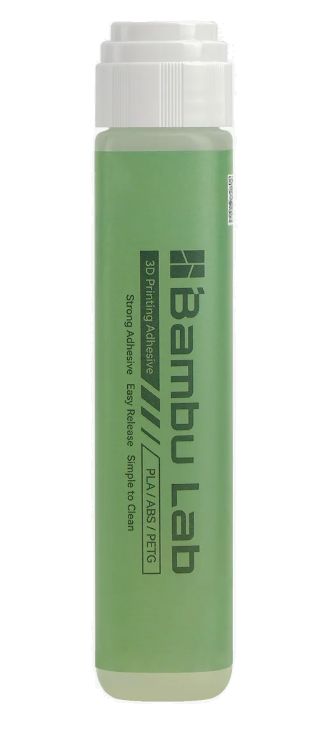
Unlike glue sticks, liquid glue spreads more evenly, allowing for a smoother and more uniform coating across the entire plate, making the application very easy.
It’s also designed to be easy to clean off both the plate and the printed model, leaving behind less residue than traditional glue sticks. Additionally, it’s made from environmentally friendly ingredients, is safe to use, and produces less odor, making it a cleaner and more user-friendly option for maintaining reliable adhesion during prints.
Can the use of glue replace washing the plate between prints?
No. Using glue, whether a glue stick or liquid glue, does not replace the need to properly wash your build plate.
While glue can help with adhesion and protect the model or print surface from damage, it doesn’t remove oils, dust, or leftover residue that can build up over time and interfere with print quality.
A clean print surface is essential for consistent first-layer adhesion, and over-relying on glue without cleaning can lead to uneven prints or failed adhesion. Regularly washing the plate with warm water and detergent ensures the glue works effectively and that your prints stick properly every time.
Glue is a helpful tool, but not a substitute for proper maintenance.